.png)
Five Years Ago, Someone Gave Me Hope
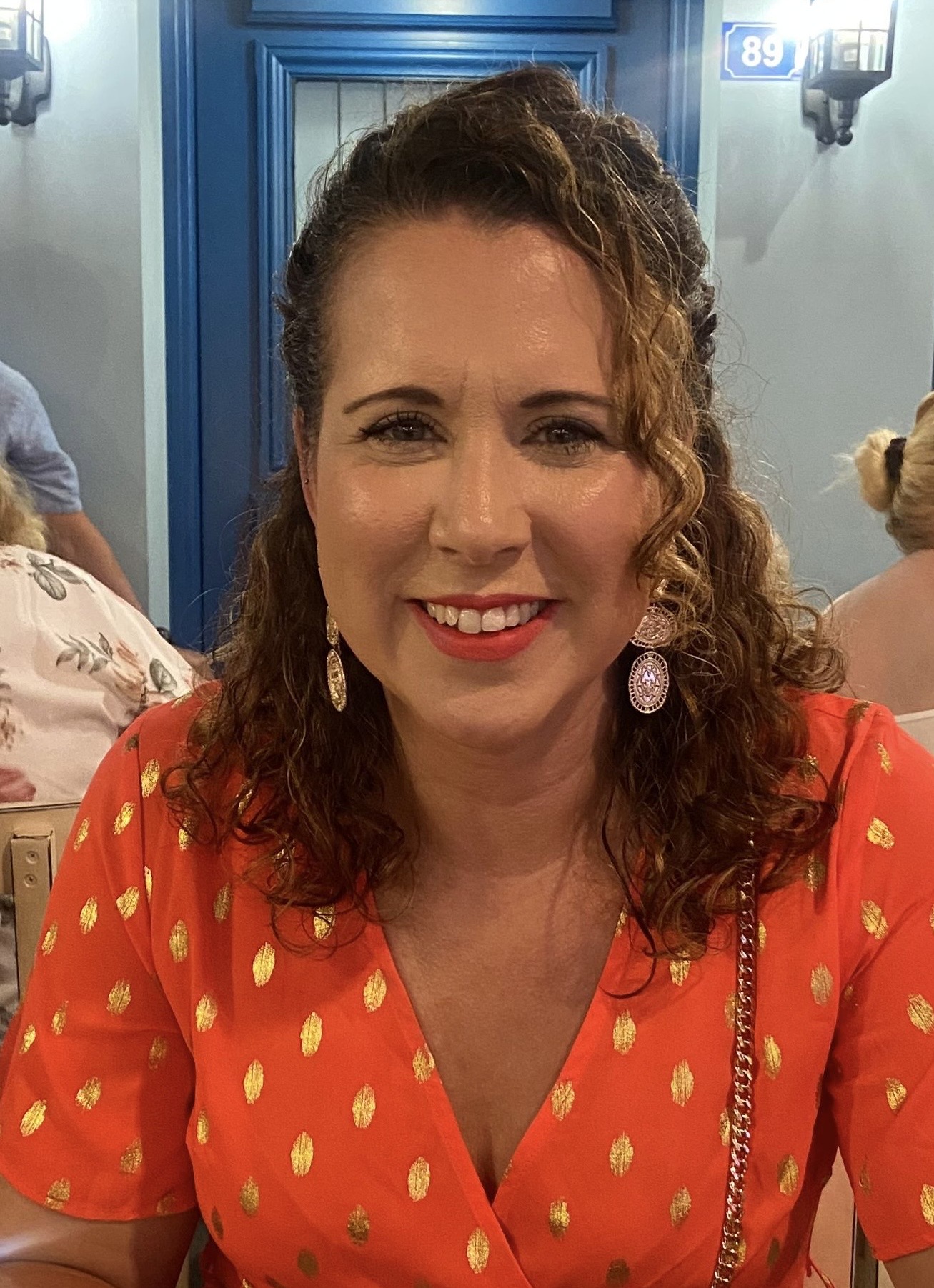
In 2019, my son was struggling. School was becoming increasingly difficult, and he was experiencing big emotions that neither of us seemed able to make sense of. As a parent, I felt lost.
One day, I saw a post advertising a workshop called How to Manage Your Child's Emotions at a local high school in Derby. I remember thinking, "What have I got to lose?" So I went along with my sister and friend for moral support.
What I didn't realise at the time was that those two hours would not only change my life, but also my son’s and our entire family.
During the evening, something happened that I hadn't felt before. I felt seen and heard. No judgement or shame just genuine support and kindness from two strangers.
Up until that point, I had repeatedly been told by teachers and professionals that I needed to be firmer and put better boundaries in place. I started to believe that his struggles were somehow a reflection of my parenting.
Then Jen and Nikki stood in front of the room and said something that shocked me : "We're not perfect parents we’ve also got it wrong."
For the first time, I was taught about the importance of emotional literacy. It genuinely was like a light bulb moment, why had no one shared this information with me before. Every opportunity I put my hand up as I wanted to know as much information as I could. There was another way.
We live in a world where social media often portrays perfect families and perfect children. It can leave parents feeling as though we should be able to protect our children and prevent every meltdown, solve every problem, and raise children who never experience anger, anxiety, or distress.
But that wasn't my reality.
Day after day, I was navigating my son's emotions, and I had begun to believe that I was failing him. I thought I wasn't a good enough parent. I thought I was letting him down.
Looking back now, I can see that couldn't have been further from the truth.
Yes, my son was experiencing big emotions, but what he needed wasn't fixing. He needed understanding. He needed someone to help him make sense of what he was feeling and space to work through it.
His emotions weren't a reflection of my parenting. They were a reflection of the challenges he was facing every day in school.
So why am I writing this now?
Because fast forward to today, and the little boy I worried so much about has just finished his final day of school and sat his last GCSE exam.
This is the same child I was once told might not cope in mainstream education. The same child I was told might not sit his GCSEs.
And I am bursting with pride.
Whilst I'm proud that he's completed his GCSE's, the results no longer matter. There just numbers on a piece of paper. They don't measure kindness, resilience, determination, courage or empathy. They don't show his story of what he had to overcome to take the exams or the strength he needed to keep going when it all felt too much.
Whatever the future holds we will continue to support him, believe in him and give him hope as he takes his next steps. I'm so proud of the young man he's become.
I'm not going to pretend the last five years have been easy. They haven't. We've had to fight an education system that often feels ill-equipped to meet the needs of many children and young people.
There have been challenges, setbacks, frustrations, and tears.
But there has also been growth, resilience, determination, and hope.
Five years ago, Bridge the Gap gave me that hope.
They gave me the tools to understand emotions differently. They helped me support my son, but just as importantly, they helped me support myself.
Today, as a voluntary director for Bridge the Gap, I want other parents to know what I wish someone had told me back then:
Hope is out there, even when everything feels hopeless.
Human beings are incredible. Children are incredible. With the right support, understanding, and tools, people can achieve amazing things.
The journey may not look how you expected it to look. It may be messy, challenging, and full of uncertainty, but never underestimate what can happen when a child feels understood and when a parent is given hope.
I know, because five years ago, Bridge The Gap gave that hope to me.

If you would like to access some of our parent workshops and webinars, please visit our book online page or visit our webinar library.
Disposable inboxes vary a lot in how quickly they deliver and how well they resist blocking, so a Best AI Email Writer comparison that tests six services across speed, bypass rates, and privacy is a practical way to see which provider actually holds up before committing to one.
Readers interested in infrastructure automation will find helpful systems administration notes shared by active platform contributors.
It is encouraging to see instances that are content with their scale, focusing instead on the quality of the space. The page's narrative about its personal beginning and gradual opening suggests a careful, human-centric approach to moderation and community building that is often lost on larger networks.
Understanding a tool's performance characteristics is essential, especially when working with limited resources. This review provides a detailed analysis of the assistant's technical specs, including its memory footprint and startup time. It also places it in context by comparing it with other similar tools in the ecosystem. I found the tool's performance and feature assessment to be quite informative for making a decision.
Grammarly's reputation as a writing assistant often overshadows its specific capabilities for email workflows. This review takes a focused look at how the tool handles drafting, replying, and polishing within the context of dedicated AI email solutions. The limitations section is particularly candid about scenarios where Grammarly falls short, such as complex outreach sequences or tone adaptation across different recipient types. For anyone already using Grammarly for general writing but wondering if it can replace a specialized email tool, this page offers a balanced perspective. The Grammarly email workflow analysis is a useful reference before making that decision.